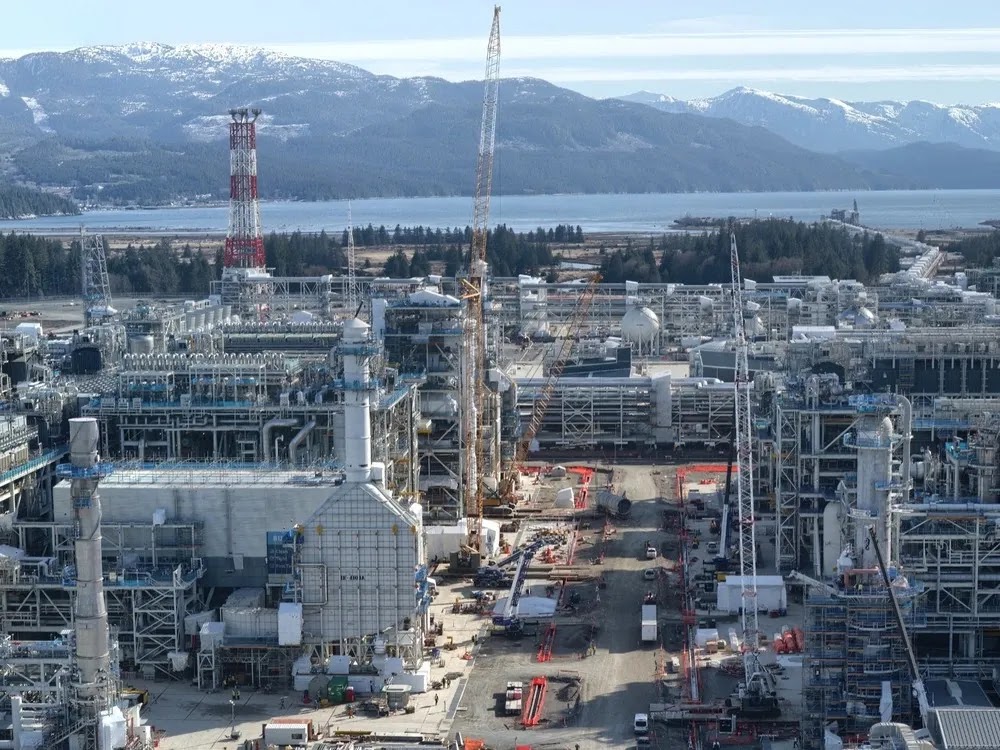
Thursday, December 4, 2025

Prince Rupert By Rail Or By Pipeline


From a slow beginning in 1914, the Port of Prince Rupert has since evolved to become Canada's 3rd busiest seaport and a critical component in the effort to diversify our exports. Strategically located on the Pacific Great Circle Route between Asia and the West Coast of North America, it's the closest port to Asia as well as being the deepest ice free harbour in North America. Connected to the rest of the country by the CN rail network, it offers the most convenient solution to the seemingly intractable problem of getting Albertan oil to market.

In addition to being a container port, and handling various bulk commodities like coal and grain, it is also a liquified petroleum gas (LPG) facility. Exporting propane and butane from the Ridley Island energy export facility, which is expanding to handle up to 171 ships per year, it is also well positioned to add natural gas or crude oil from the tar sands. Even without a pipeline oil could be delivered by rail without any additional approvals. The only real issue is the north coast tanker ban.


In Vancouver, oil tankers are already safely navigating a technically more difficult passage through Juan de Fuca Strait thanks to a tugboat escort for every ship, and the same thing could easily be arranged for Prince Rupert out past Haida Gwaii which is roughly the same distance.


But while rail is an option it can only be a temporary one. Pipelines are much safer and an infinitely more efficient method of transporting any petroleum product. To handle the 890,000 barrels of crude oil a day now going through the Trans Mountain pipeline would require an equivalent 1,300 railcars per day. However, with all the problems of trying to find a pipeline route to Prince Rupert it might be easier to just add another one next to the recently completed Trans Mountain pipeline in Vancouver.


But while the debate rages over the best location for an oil pipeline, the Port of Prince Rupert lost out on what could have been Nutrien's latest potash facility. Vancouver had run out of room for another bulk facility but Prince Rupert could easily have accomodated it yet inexplicably they decided to locate in Washington instead. Nutrien is a Saskatechewan company that is the world's largest producer of potash and it goes to show that if we can't convince ourselves to take advantage of what we have to offer we are never going to win the bigger fight. It's time to get behind oil shipments to Prince Rupert and, while we wait for a pipeline to be built, ship it there by rail.

Monday, October 13, 2025

Churchill - Canada's Gateway To The World


The secret to getting ocean access to export oil and gas is not on the west or east coast but rather right up the north through the Port of Churchill on Hudson Bay. Originally opened in the 1920's there is already a fully built out port along with a refurbished railway connecting back to Winnipeg that is sitting there under utilized and waiting for the stars to align. Fortunately that moment has finally arrived.


With the European tap to Russian natural gas now turned off thanks to the Ukrainian war, there exists a huge opportnity for Canadian natural gas to take its place and provide a little competition to the Americans who are currently the only supplier. Natural gas is now flowing to Asian countries via the new facilities in Kitimat on the west coast with more to follow, but the European market is effectively closed off without the proposed pipeline extention through Quebec to the Maritimes that was nixed back in 2017. 


But folks in the Prairie provinces are certainly not opposed to pipelines and an alternate route could be tapped into the existing Trans Canada Mainline pipeline at Portage La Prairie/Winnipeg and follow the Hudson Bay railway up to Churchill. Alberta oil could probably also be shipped on this route and loaded onto bulk tankers for delivery to the Irving Oil refinery in St. John, the country's largest. Both the port and the railway are owned by the Arctic Gateway Group, an Indigenous and community owned company which also ensures benefits flow to the people and communities of the North. 

Hudson's Bay Railway

Of course there is even more we could do with the Port of Churchill. Churchill offers the closest route for European goods to enter the North American market and connect to the intercontinental railway. With its four deep-sea berths capable of handling Panamax-size ships for bulk shipping, general cargo, and oil tankers, not to mention its grain elevators, with 140,000 tons of storage capacity, or 2,500,000 bushels of grain, that are three times the size of Vancouver's, this port should be bustling year round, and it would also make an ideal location for an LNG plant and container terminal. 

It's been 100 years since the Port of Churchill first opened and the vision of the folks back then is even more valid today. With all the geopolitical changes that have been happening, the timing has never been better for realizing the full potential of this arctic port. Yes there is the problem of sea ice, which currently limits shipping through Hudson Bay to a maximum of 5 months per year, but one of our new icebreakers would be able to clear an open path for any ship that wanted to transit in from or out to the Atlantic Ocean. The time has come for the polar bear and beluga whale capital of Canada to finally cash in on its unique location and become Canada's gateway to the world.

Sunday, August 17, 2025

Elbows Up Canada


Ever since the Americans have elected their wackjob, extortionist, President Trump, Canada has had to deal with his threats, reneging of agreements, and bullying. Fortunately we have elected a Prime Minister who is the exact opposite in terms of temperment, intelligence, and respectful standing with the rest of the world. And while Carney charts a badly needed diversification path for our country, the rest of us also need to get serious about how we can do our part to reduce our reliance on the U.S.


The most obvious thing we can do is boycott American products and buy Canadian or other country brands instead. There is no shortage of beer, wine, and hard liquor to choose from around the world and they are all, without a doubt, of much better quality. The same goes for food, whatever we don't produce ourselves (and we should be doing even more) we can buy fresh fruits and vegetables from Mexico and the rest of Latin America. In fact there is probably nothing we need that we can't get from somewhere else that's better and cheaper. Appliances and electronics already come from Asia, the same for clothing and other textiles, and the list goes on.


The second thing we can do is avoid visiting the U.S. When it comes to travel it's more than past time for Canadians to start exploring their own country. We have sights and scenery that are just as magnificent as anything in the U.S. and the exchange rate is fantastic. If we want more sunshine, Mexico or the Caribbean are right on our doorstep, and for something completely different there is always Europe or Asia. It's also time for all the Snowbirds to put on an extra sweater and say goodbye to spending all their time and money in the U.S.


Contrary to Trump's assertion there is nothing the U.S. needs from Canada there are at least two essential products we supply. Their farmers wouldn't be able to survive without fertilizer and we supply 85% of the magic ingredient in fertilizer which is potash. Crude oil is another product that has become increasingly important to the U.S. refineries who until now have been able to source it at a discount because we didn't have enough pipeline capacity to ship it elsewhere. These are two products which should have an export tax on them to make them more expensive for Americans and provide us with a revenue stream to offset their own tariffs. Better still we should be refining the oil ourselves and building fertilizer plants instead of exporting the raw material.


But the biggest reset we need to work on is our trading relationship with China which goes all the way back to our dumb arrest of the Huawei executive that led to the two Michaels incarceration. Stupidly we sided with the U.S. and we've done it again by putting a 100% tariff on Chinese automobiles (the cheapest and most advanced electric vehicles in the world) to show support for the U.S. auto industry and to try and protect our own auto workers. Not surprisingly China then put a 100% tariff on our canola which effectively throws all our farmers under the bus.


Yes the Canadian auto industry is an important contributor to the economy but when you compare it to the farming industry it's a different story. Instead of trying to be part of a diminishing U.S. auto industry maybe we should be trying to assemble Chinese cars. Or better still putting skilled tradespeople to work in an expanding nuclear power industry that is facing a shortage of millwrights, electricians, boilermakers, pipefitters, welders, sheet metal workers, and control technicians amongst others.


And while the Americans are putting tariffs on our steel exports maybe this is the time to keep it in-house for use in pipelines, high-speed railways and other neglected projects that would boost our productivity. We could also use it for all the tanks, planes, and ships we are supposed to start building as part of our expanded defense budget.


With regards to defense spending the first thing we have to do is cancel the planned order for the American F-35 fighter aircraft and buy the rights to the Saab Gripen which we can manufacture here in Canada. The same goes for all munitions, guns, and tanks, jeeps, and other combat vehicles we could easily build in our neglected auto plants. And now that we've got our naval shipyards back in production after years of neglect there is no reason we can't speed up construction of all the ice-breakers and other ships and support vessels we need. We used to be world leaders in aircraft and shipbuilding capabilities and now the stars are aligning for us to get back in the game and restore our reputation.


And finally there is Canada's North. Here we have the most to gain by investing in ourselves. In addition to military bases we need more roads, upgraded airports, and infrastructure investments in the communities already established. There are also tremendous resources waiting to be extracted including oil & gas, critical minerals of nickel, copper, zinc, and cobalt, deposits of iron ore, coal and uranium, and of course gold. It's almost overwhelming how much there is to do and how much potential this country has but there's never been a better time to roll up our collective sleeves and get our elbows up.

Saturday, July 5, 2025

FIFA Vancouver - A $700 Million Circus


If anyone ever needed an example of how mixed up Vancouver and the Province of B.C. have gotten with their priorities, never mind their math, you only need to look at the FIFA sponsorship they signed up for to really give your head a shake. The cost to host a portion of the 2026 games has ballooned from an initial estimate of $260 million 3 years ago to $700 million and rising. This works out to $100 million per game and there is no way of getting out of this ludicrous contract.

The government trots out all sorts of rosey predictions of how this will pay for itself in the end with a boost to the economy by all the people staying in the city to attend the games plus the increased future tourism the games will generate as a result of Vancouver being in the world spotlight. What a load of bunk. Vancouver is already well known in the world thanks to Expo 1986 and the 2010 Winter Olympics with the main result being a lot of high-rise construction and overheated property values.


Contrast this with Taylor Swift's recent appearance that didn't cost the city anything and generated a $157 million economic impact. There was $97 million in direct spending for hotels and restaurants etc. and 70% of it was driven by fans coming from outside Vancouver. And to top things off Taylor Swift ended up raising over $2 million for local charities while donating $100,000 to the food bank.


In 2022 voters had to approve a capital borrowing plan of $495 million but strangely there was no voter approval required for the $700+ million for the FIFA event. Already the projected cost of the Aquatic Centre replacement project has gone from $140 million to $170 million and the pool size has been cut in half but at least the money is for something that will last 50 years as opposed to only 7 nights. While the visiting soccer players will have practise fields at their disposal during the games, the swimming community will have to do without a pool for over 3+ years while a new one is being built because the city couldn't come up with the money or the plan to build one in a different location before tearing the old pool down.


Meanwhile TransLink, the Metro Vancouver transit authourity providing bus and Skytrain service is projecting an annual $600 million deficit. A referendum to fund the transit service with a tiny increase in the sales tax was defeated so now the various levels of government are trying to find some other way of squeezing the money out of the taxpayer's pockets. This is on top of the $1.5 billion dollar capital budget for expanding the bus and rapid transit corridors. Transit is an essential service, unlike soccer, yet how is it $700 million magically appears for FIFA but there's no money for our overcrowded bus/Skytrain service? 


Probably the biggest problem facing Vancouver is the Downtown Eastside with its estimated 7,000 drug addicted and mentally challenged street people that have infested an area of approximately 30 square blocks. A new healing centre has opened on the site of the old Riverview Hospital where these people used to be housed but it only has 100 beds and it cost $100 million to build. That works out to $1 million per addict and a potential bill of $7 billion if we want to ever clean up the mess that has been made by closing the original Riverview. Still $700 million would go some way to getting started on a long term problem rather than for just a few nights of entertainment.


Our taxes keep going up but we can't seem to maintain what we already have. Nor does it seem that we know how to prioritize what's important. The Roman Emperors knew that in order to keep the people in line all you needed was bread and circuses. $700 million for FIFA is nothing more than a very expensive circus and as long as everyone has enough bread to eat I guess that's all we're going to get.


Wednesday, May 21, 2025

Lost City


Vancouverites could be forgiven if they have started to wonder what has happened to their beloved city these days. It all started with Expo 86 of course, when we were all so anxious to show off our magnificent location to the world and embrace the spirit of boosterism that went with the cleaning up of False Creek and the inauguration of a new driverless transit line called Skytrain. And sure enough the world took notice.

Before we knew it there was a construction boom and high-rise apartment buildings were going up all over the place. Overseas money was pouring into developments that were grander, richer, and more fantastic than anything ever constructed before. And property values started to skyrocket.

New high density neighborhoods were popping up in areas like Coal Harbour, the River District, Yaletown, Olympic Village, and the Cambie Corridor, with many others in various stages of planning. This didn't even count the even bigger developments taking place throughout Burnaby, Coquitlam, Surrey and Langley not to mention the North Shore. And in spite of all this supply the prices kept rising.

With all this new housing, traffic on the main roads is at the breaking point and the transit system can barely keep up with the demand. The original Skytrain line from Surrey to Downtown continues to expand with routes throughout Burnaby and Coquitlam, and out to Richmond and the airport. Construction has now started to bring it out to UBC in the west and Langley in the east with planners now looking to find a way to the North Shore. And of course everything is already years behind.

Then there are the unsexy, hidden parts of the city that have to be expanded to handle all of this development. Clean water, a sewage system, and other utilities like natural gas, electricity, and Internet connectivity. With this comes endless disruption as streets are repeatedly dug up and patched. And of course everything goes hopelessly over budget.

From approximately 1.5 million in 1986 to 3 million now, the Metro Vancouver population has doubled since Expo 86 and Vancouver itself has gone from 430,000 to over 600,000 residents. The neighbouring municipalities have also seen rapid growth with Surrey projected to pass Vancouver in population in the next few years. Where all these people have come from is a mystery.

However, in the midst of all this construction there is one thing the City has not kept up with and that is the Parks & Recreation facilities and Community Centres. Vancouver hasn't built a new community centre or swimming pool since 2009 and most of the inventory is more than 50 years old. There a total of only 8 indoor swimming pools of 25 metres or more in length and, with the exception of the Hillcrest pool, they were all in place before 1986. 
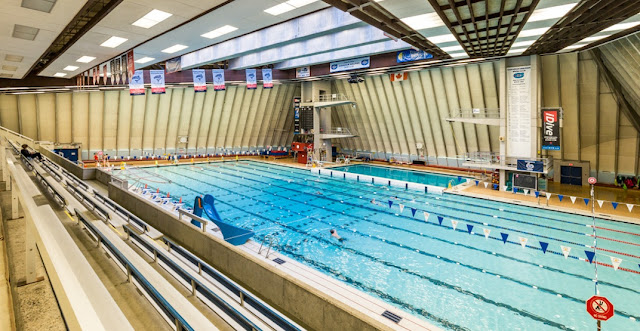

In 1986 there was one pool for every 55,000 residents and now in 2025 there is one pool for every 75,000 residents. With the planned closing of the Aquatic Centre in 2026 this will bring it down to one pool for every 85,000 residents. Not only has the City failed to keep up with the facilities required for a growing population they have also failed to maintain the ones they have. There used to be 9 outdoor pools in Vancouver and now there are only 4 with one of them, Kits pool, chronically out of service and 2nd Beach pool is still waiting for the showers and changerooms they were promised 30 years ago when the pool was built in 1995. In contrast Montreal has 74 outdoor pools and Toronto has 57.


The Community Centres and Recreation Facilities are what gives the various neighbourhoods their identity and provides a measure of human scale amidst the concrete jungle. For many folks these facilities are their church, and provide a source of both mental and physical health. In their absence the city becomes increasingly impersonal and residents lose their connectivity with where they live. Of course money is always the issue but with all the money being made by developers there was supposed to be something called Community Amenity Contributions that would go towards providing pools, parks, community centres, improved transit, and other services for an increasingly congested city. 

With every new development the City continues to grow but it's also been slowly losing its soul. Rising property values are pushing out the small merchants that provide character to a neighbourhood and drugs and homelessness are everywhere you look. With many apartments owned by absentee investors, buildings are dark and there aren't the expected number of people living in a given area to support the shops and restaurants. 

Yes times have changed, and we have gotten what we indirectly asked for but one can't help but feel nostalgic for less crowded streets, streets that were free of homeless people hunched over in drugged out oblivion, and well maintained streets and public facilities. Never mind housing and rental prices that are within reason. Vancouver has certainly been discovered but, for those who live here, it's in danger of becoming lost.

Friday, March 21, 2025

Looking Out My Back Door


Imagine my surprise the other day when I looked outside my window and saw a rather strange looking ship sitting at anchor in English Bay. Wondering what type of ship it was, a quick search identified it as a first of its kind ship-to-ship refuelling vessel, owned by Seaspan, that instead of diesel it supplies LNG. With LNG now coming into its own as a transition fuel for the shipping industry, this is a welcome improvement to the dirty bunker oil most ships are using. 

And in keeping with cleaner, low carbon solutions for the shipping industry, Vancouver is now one of the few places in the world to have electric tug boats operating in its harbour. With a fleet of over 200 tugs SAAM Towage is the largest tugboat operator in the Americas, and adding electric tug boats is a big game changer for the industry. Quiet, pollution free, and providing instant power when needed, tug captains are singing their praise.


But they weren't the first electric tugs to appear in Vancouver. The first electric tug in Canada, and the world, was the Haisea Wamis, owned by HaiSea Marine, a collaboration between the Haisla Nation and Seaspan. HaiSea now has a fleet of three electric tugboats and all of them are up in Kitimat where they are providing escort towing services for the LNG industry.


Both the HaiSea Marine and SAAM Towage tugs were built in the Sanmar shipyard in Turkey where most of the world's tugboats are made. Designed by Robert Allan Naval Architects and Marine Engineers and powered by Corvus Energy, two innovative firms, both founded in Vancouver, that have become leaders in clean marine technology.


Of course what links all this together is the new LNG facility in Kitimat that, after 7 years of negotiations with First Nations and various levels of government, followed by more than 7 years of constructing pipelines, processing units, tanks, and marine terminals, is finally getting ready to open. While still considered a fossil fuel, natural gas is viewed by many as a transitional fuel source for the world as it slowly shifts to nuclear, solar, and other sources of renewable energy. With some of the world's largest natural gas reserves and being the world's 5th largest producer of natural gas, Canada is well positioned to take advantage of this transition.


While the Haisla peoples in and around Kitimat have partnered with the LNG Canada consortium to provide employment opportunities for the community at the facility itself, the actual construction of the 670 km. pipeline by Coastal GasLink was considerably more complicated. Agreements had to be signed with all 20 bands along the route from Fort St. John to Kitimat and this exposed the decision-making challenges that had to be addressed between elected and hereditary leaders. There were numerous protests and court challenges but eventually the work proceeded and the pipeline was built. 


The Kitimat facility will be the first LNG export facility in Canada. LNG, which is natural gas cooled to a liquid state at extremely low temperatures, is loaded onto specially designed vessels where the gas is kept in tanks at a temperature of -162C for transport. This process reduces the volume of natural gas by 600 times making it easy to store. Since LNG does not contain oxygen it cannot support combustion making it very safe to handle. If LNG is somehow released it quickly vapourizes and disappears into the atmosphere without leaving any residue behind. LNG shipping has one of the best records in the world without a single cargo loss since the first commercial ship went into operation in 1964. Good thing because the Kitimat facility anticipates an LNG tanker leaving every day.


The miles of pipes in the Kitimat LNG facility are enough to bewilder any casual observer and even more amazing is that they come in pre-manufactured modules, 10 storeys high, from China that are then assembled on site. If all goes well a second phase is planned that will double production. But this isn't the only LNG export facility planned for B.C. there is also the Woodfibre LNG in Squamish, Ksi Lisims LNG in Gingolx, Cedar LNG in Kitimat, and Tilbury LNG in Delta that are coming on stream. Of course these facilities also require a tremendous amout of power to operate, whether it is hydroelectric, natural gas or a combination of the two but clearly they represent the future in terms of a net new energy source.


The U.S. has been quick to take advantage of Europe's need for LNG, following the destruction of the Russian Nordstream pipelines during the Ukranian war, but Canada was left out in the cold. So far all of our export facilities are based on the west coast with an eye on the Asian market. A pipeline to the East Coast is needed to open up the European market. Now that we have finally woken up to the threat of the U.S. to our economy and perhaps our very existence, this could be the opportunity for us to get moving on finally building a robust LNG export business. Change is in the air and looking out my back door I'm seeing a lot of LNG.